Showing posts with label ScienceWorks. Show all posts

Friday, April 04, 2014

Earth Science: Astronomy, Unit 5

Planets

Did you think we got sucked into a black hole or something? Naw, it just took us a while to get through our study of the planets. Wowzers...did we ever learn some fascinating facts! A lot of new information since my stint in fourth grade. Tessa's all set to build a space rocket in the backyard so she can zoom off for a first-hand look.


Introduction

Mercury

Venus

Earth

Mars

Jupiter

Saturn

Uranus

Neptune

Pluto

A page from Tessa's completed "My Pocket Planet Guide." Did you know Titan, one of Saturn's moons, has an atmosphere?

Monday, March 03, 2014

Earth Science: Astronomy, Unit 4

Constellations

As enthralled as Tessa is with Greek myths, I was pretty sure she would enjoy learning about constellations. And, how right I was! She has absorbed so much since we started our study of space that when we visited the Saint Louis Science Center's James S. McDonnell Planetarium last week, she knew nearly all of the answers to the questions the docent asked during the sky shows we viewed. Stellar!


Tuesday

Wednesday

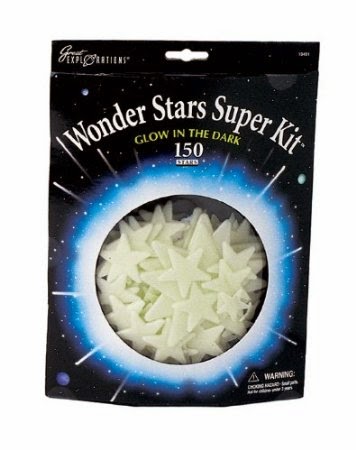
Wonder Stars Super Kit by University Games


Following Monday

Tessa and I created a constellation viewer with an empty Pringles can, card stock and star stickers.

Wednesday, February 19, 2014

Earth Science: Astronomy, Units 2 & 3

Stars & the Sun

A brief intro to the stars and sun.


Unit 2 - Stars

Unit 3 - The Sun

Tessa cut out pictures from magazines to make a collage of things that depend on the sun to survive.


Thames & Kosmos - Space Exploration Kit

Wednesday, February 12, 2014

Earth Science: Astronomy, Unit 1

Our Solar System

Tessa and I are beyond excited to begin exploring space! This will be our final science unit of the year. So far, Tessa is completely enthralled. We are planning a trip to the planetarium soon.


Monday

Tuesday
The Magic School Bus book and episode mentioned above follow the same story line. Tessa loves The Magic School Bus, so she didn't mind the overlap. If you can only get one, get the audiobook. It is better and more informative.

Wednesday

Tessa created this out-of-this-world planet chart with the Evan-Moor "Put the Planets in Order" lesson from above. She painstakingly colored the planets and then pasted them in order on black cardstock (several pieces taped together). She also drew the sun.
Tessa created this out-of-this-world planet chart with the Evan-Moor "Put the Planets in Order" lesson from above. She painstakingly colored the planets and then pasted them in order on black cardstock (several pieces taped together). She also drew the sun. 

Other Resources of Interest
The magnetic solar system set includes a play board underneath the magnets. Imagine the scene in the pic below without all of the planets, labels, etc. on it...just the sun, stars and orbits. (And, silhouettes for where the classic planets go.)

Magnetic Solar System Playset by Ata-Boy

Monday, October 28, 2013

Earth Science: Geology, Unit 8

Fossils

I can't believe this is it for our study of rocks. Tomorrow, we begin weather!

Tessa studied fossils last year during Ancient History, Week 2 and completed a lab very similar to the one featured in ScienceWorks. Many of the unit's worksheets are redundant and not altogether enlightening, so I chose to condense the unit down to one day.


Monday

Earth Science: Geology, Unit 7

Earth's Resources

A little education goes a long way. In less than an hour, Tessa went from local litterbug (okay, not entirely true, but you know how careless little kids can be with their trash), to resident green freak.


Wednesday

Friday

You wouldn't know it from her "smile," but Tessa had a blast designing her own conversation poster. She chose to remind people to recycle cans, paper, plastic and glass.

Wednesday, October 23, 2013

Earth Science: Geology, Unit 6

The Incredible Changing Earth

Tessa learned how erosion, volcanoes and earthquakes change and shape the Earth.


Tuesday

Wednesday

Following Monday

What lesson on volcanoes would be complete without the classic baking-soda-and-vinegar volcano lab? I think we'll shoot for something a little more dramatic our next time around.

Following Tuesday

Wednesday, October 16, 2013

Earth Science: Geology, Unit 5

Rocks Form In Different Ways

Who knew studying rocks could be so much fun. This week, Tessa learned how different types of rock form with some tasty kitchen demonstrations.


Monday

When magma (melted rock) pushes up through the Earth's crust it cools into solid igneous rock. Tessa and I made candy lollipops to demonstrate the process.

Tessa enjoyed her igneous rock lollipops, which we flavored with bubblegum candy oil.

Tuesday

Sedimentary rock is made from layers of mud, sand and seashells. Over time, pressure and heat cause the layers to stick together and form new rocks. Tessa assembled and then we baked this layer cookie to demonstrate to process.

Wednesday
Instead of following the recipe provided in ScienceWorks, we used a few pieces of refrigerated break-off cookie dough to demonstrate how metamorphic rock is formed, which was a much easier means to the same end.


Following Monday

Tessa layered school glue, sand and pebbles in a small plastic cup to create a conglomerate rock of her own.

Saturday, September 28, 2013

Earth Science: Geology, Unit 4

Properties of Rocks

Studying the properties of rocks was an absolute blast this week! Through a variety of hands-on labs, Tessa learned about the colors and patterns of rocks and minerals, measured their sizes and weights, and performed tests to determine their hardness and buoyancy.


Tuesday

Tessa sorted rocks and minerals by various characteristics of her choosing.

Tessa has long been infatuated with rocks. For years, she has picked up "special" rocks on our walks to and from the mailbox. So, for the "Rock Hounds" portion of this lesson, she went straight to her "rock garden" to collect samples.

Wednesday

Following Monday

After arranging a selection of rocks by her perception of smallest to largest, Tessa measured the rocks and recorded their actual sizes. To do so, she wrapped pieces of yarn around their widest points, then measured the cut lengths. She was surprised to learn that her perception was drastically off in some cases.
After arranging a selection of rocks by her perception of smallest to largest, Tessa measured the rocks and recorded their actual sizes. To do so, she wrapped pieces of yarn around their widest points, then measured the cut lengths. She was surprised to learn that her perception was drastically off in some cases. 

Afterward, Tessa used a balance to weigh the same rocks and recorded their weights.
Afterward, Tessa used a balance to weigh the same rocks and recorded their weights. 

Following Tuesday

Tessa loved performing scratch tests to determine the hardness of a sampling of minerals. She attempted to scratch them first with her fingernail (hardness of 2.5), then a copper penny (hardness of 3) and finally an iron nail (harness of 5).

Following Wednesday

Wednesday, August 28, 2013

Earth Science: Geology, Unit 3

How Soil Is Made

Tessa learned how soil is made with some quick-and-easy hands-on activities.


Tuesday

Tessa examined a cup of soil to discover what soil contains. She sorted the things she found into three piles...once living, living and nonliving.

The majority of what Tessa found where once living things. Among them were a decaying leaf, root fragments, an acorn and pieces of wood.

Wednesday

Tessa helped bury a mesh sack full of vegetable and fruit scraps in an empty plot in the garden. We'll check back in three months to see what happens when plants decay.

Other Resources of Interest
  • Dirt - Ellen Lawrence

Monday, August 26, 2013

Earth Science: Geology, Unit 2

The Earth's Crust

Unit 2 was an easy (and fun) one-day study of the Earth's crust. Tessa enjoyed going outside to collect things on the Earth's crust.


Monday

Paper lunch bag in hand, Tessa set off to collect things that are on the Earth's crust.
Paper lunch bag in hand, Tessa set off to collect things that are on the Earth's crust. 

Tessa sorted her finds into two piles...things that are part of the Earth's crust and things that are on the Earth's crust. Then, she sketched the items on a record sheet. She indicated that rock and soil are the only two things that are part of the Earth's crust.

Friday, August 23, 2013

Earth Science: Geology, Unit 1

The Earth Has Layers

We are continuing with the four-year cycle for both science and history this year. That means it's Earth science for us! Our yearlong study of the Earth will be broken down into three segments...geology, weather and space.

We had a really good experience with Evan-Moor ScienceWorks last year, so we will continue with it for Earth science as well. Evan-Moor doesn't have an appropriately-aged ScienceWorks book for weather, so we will use a resource from The Mailbox for that segment.

Geology - Evan-Moor ScienceWorks for Kids: Geology, Grades 1-3
Weather - The Mailbox Investigating Weather, Grades 1-3
Space - Evan-Moor ScienceWorks for Kids: Exploring Space, Grades 1-3

I'm feeling conflicted as to how to organize the science portion of our blog this year. Last year, I posted by the week. Each week typically featured one unit's worth of work. We added a complete language arts program to Tessa's schedule this year, so that has increased her daily workload by a good bit. Unfortunately, this means we have to tighten our schedules for science and history. Except for very rare occasion, we will study science a strict three days per week. That means, some weeks we will cover two units and other weeks we will split one unit over two (or even three) weeks. So, what I'm trying to say with all of my rambling is that I think it makes more sense to post by the unit this year.

Here we go...unit one!


Monday

Tuesday

Tessa thought this simple paper craft was pretty cool. She moved "The Magic School Bus" through the layers of the Earth!

Wednesday
Since the record sheet that goes along with the "Clay Models..." activity was a lot like The Magic School Bus activity Tessa completed on Tuesday, I had her sort and label the layers of the Earth with the free Layers of the Earth Nomenclature Cards from The Helpful Garden. I printed them in black and white and then colored them by hand to match the layers from the "Clay Models..." activity.

Using modeling clay, Tessa created a model of the Earth with secret layers inside.
Using modeling clay, Tessa created a model of the Earth with secret layers inside. 

Tessa wasn't very happy about cutting open her model. After explaining that was the whole point of making it, she correctly identified the layers...inner core (red), outer core (yellow), mantle (orange) and the Earth's crust (blue and green).

Tuesday, July 23, 2013

Life Science, Week 33

Plants That Never Bloom

We finished up our first-round study of the life sciences with plants that never bloom, focusing on mushrooms and ferns that reproduce by spores as apposed to seeds. We also touched upon plants that have cones.

Join us at the end of next month when we embark on our mission to study the earth and space. We will once again use Evan-Moor ScienceWorks to do so.


Monday

Tuesday
The mushroom prints were so easy that they really could have been combined with Monday's lesson.

Thursday, July 18, 2013

Life Science, Week 32

What Plants Need & Why People Need Plants

Tessa reviewed that plants need food, water and light to grow. She also learned that people need plants for food and oxygen.


Monday
We're to the point in our school term that we're quickly wrapping things up. We already have several ongoing plant experiments in the works, so I opted not to start any new ones. Tessa generally understands the needs of plants, so we talked through the experiments and she made appropriate guesses to what would happen to the plants in each one.

Wednesday
When I don't want to go through the process of creating a bulletin board, I fold a sheet of paper into the appropriate number of parts and have Tessa draw the activity in a similar fashion.

Instead of creating a bulletin board, I had Tessa complete the activity by drawing it out on paper.

Thursday
I really wanted to perform the "Plants Make Oxygen" experiment, but I couldn't easily come by a water plant in our area and we aren't visiting a larger city until the end of next week.

Other Books of Interest

Friday, July 12, 2013

Life Science, Week 31

Traveling Seeds & Changing Plants

Tessa learned the various ways seeds travel. Now, she thinks it's a hoot every time our dog carries in a seed on her fur. She also learned the ways a plant changes as it grows.


Monday

Tuesday

Thursday

Tessa prepared a seed-growing bag that she will monitor for 21 days. She will mark significant stages of growth on a chart to see exactly how long each stage takes.

Friday
Since we have a vegetable garden, and various plants growing outside around the house that Tessa helped plant, we opted not to complete any additional activities from Evan-Moor ScienceWorks for Kids: Plants, Grades 1-3 "Plants Change As They Grow."

Sunday, July 07, 2013

Life Science, Week 30

Fruit Contains Seeds & Seeds Contain New Plants

Tessa studied fruits and seeds to see how new plants are formed.


Monday

Tuesday

Tessa examined and counted seeds from various fruits. She learned that a fruit is a "suitcase" for seeds.

Wednesday

Tessa examined the inside of a lima bean seed (soaked overnight to soften it) up close. Noting its seed coat and then the small shoot and food inside, she sketched what she observed. Afterward, she compared the seed to others of various types to see whether all seeds contain the same parts.
Tessa examined the inside of a lima bean seed (soaked overnight to soften it) up close. Noting its seed coat and then the small shoot and food inside, she sketched what she observed. Afterward, she compared the seed to others of various types to see whether all seeds contain the same parts.  

Friday

Friday, June 28, 2013

Life Science, Week 29

Plant Parts

A fun thing about studying plants is that there are so many simple, cheap little experiments that Tessa can do with them. This week, she studied the various parts of plants with most days ending with a hands-on activity.


Monday

After removing the roots from Plant #2 outside, we brought both plants in for Tessa to observe and draw. In ten days or so, she'll observe and draw them again while taking note of what changes may have occurred.

Tuesday

In this classic experiment, Tessa and I placed white carnations and celery in colored water. After forty-eight hours, Tessa observed the subtle changes that proved that water and nutrients do indeed move through tiny tubes in stems to leaves and flowers of plants. Afterward, I sliced through the stems so Tessa could get a closer look.

Wednesday

Thursday


Friday
For the sorting activity, we used toy food that we had around the house. Instead of the bulletin board activity, I folded a piece of white paper into sixths and then had Tessa title, draw and label the foods as instructed.

Friday, June 21, 2013

Life Science - Week 28

Plants

Woohoo! We have finally made it to plants. This will be our final unit of study for life science. I'm excited, not because I think the grass will be greener on the other side, but because I'm longing for that sweet sense of completion.

We began our study of plants by taking a look at their basic parts. We will follow up in more detail in subsequent weeks.


Monday

First, Tessa put together a paper puzzle and labeled the parts and functions of the pictured plant.

Then, she looked at parts of a real plant up close. She pointed out the various parts and explained their functions.

Finally, she drew the plant, labeled its parts and wrote about what she learned.

Tuesday

Wednesday

Other Books of Interest