Showing posts with label Earth Science. Show all posts

Thursday, April 17, 2014

Earth Science: Astronomy, Units 6, 7 & 8

Earth's Moon, Space Exploration & Astronomers

That's a wrap! Our study of astronomy (and subsequently Earth Science) is officially complete. Tessa is non too happy about it. She can't imagine an entire summer without science.

Talk about perfect timing. Our study of Earth Moon's culminated on the eve of the April 15, 2014 total lunar eclipse. We camped out on top of an open sleeping bag in front of the picture window in our schoolroom where we followed the progress of the eclipse. Tessa declared it "pretty cool."

Note: We ended up skipping Unit 7 (Evan-Moor ScienceWorks for Kids: Exploring Space, Grades 1-3 "The Earth's Movements Through Space Cause Day and Night and the Seasons") since we just studied the exact same information at the end of our study of Weather.


Monday - Earth's Moon

Tessa had a little bit too much fun making "moon craters" by dropping rocks of various sizes into a tin of flour. She learned the size and height from which a rock is dropped effects the size and depth of the resulting crater.

Tuesday - Earth's Moon

Wednesday - Earth's Moon

Following Monday - Earth's Moon & Space Exploration

Following Tuesday - Astronomers
If you're wondering where Galileo is, we will cover him next week in history during our study of the Renaissance.


Following Wednesday - Space Exploration

Tessa completed a rocket-shaped timeline of some of America's most important spacecrafts.

Tessa blew a "rocket" off the end of a straw during one of three rocket experiments we attempted from our from Thames & Kosmos Space Exploration kit.
Tessa blew a "rocket" off the end of a straw during one of three rocket experiments we attempted from our from Thames & Kosmos Space Exploration kit.

Following Thursday - Extra

Friday, April 04, 2014

Earth Science: Astronomy, Unit 5

Planets

Did you think we got sucked into a black hole or something? Naw, it just took us a while to get through our study of the planets. Wowzers...did we ever learn some fascinating facts! A lot of new information since my stint in fourth grade. Tessa's all set to build a space rocket in the backyard so she can zoom off for a first-hand look.


Introduction

Mercury

Venus

Earth

Mars

Jupiter

Saturn

Uranus

Neptune

Pluto

A page from Tessa's completed "My Pocket Planet Guide." Did you know Titan, one of Saturn's moons, has an atmosphere?

Monday, March 03, 2014

Earth Science: Astronomy, Unit 4

Constellations

As enthralled as Tessa is with Greek myths, I was pretty sure she would enjoy learning about constellations. And, how right I was! She has absorbed so much since we started our study of space that when we visited the Saint Louis Science Center's James S. McDonnell Planetarium last week, she knew nearly all of the answers to the questions the docent asked during the sky shows we viewed. Stellar!


Tuesday

Wednesday

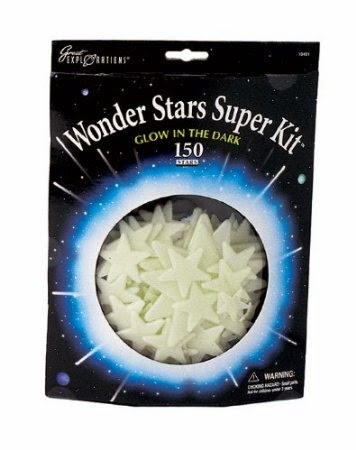
Wonder Stars Super Kit by University Games


Following Monday

Tessa and I created a constellation viewer with an empty Pringles can, card stock and star stickers.

Wednesday, February 19, 2014

Earth Science: Astronomy, Units 2 & 3

Stars & the Sun

A brief intro to the stars and sun.


Unit 2 - Stars

Unit 3 - The Sun

Tessa cut out pictures from magazines to make a collage of things that depend on the sun to survive.


Thames & Kosmos - Space Exploration Kit

Wednesday, February 12, 2014

Earth Science: Astronomy, Unit 1

Our Solar System

Tessa and I are beyond excited to begin exploring space! This will be our final science unit of the year. So far, Tessa is completely enthralled. We are planning a trip to the planetarium soon.


Monday

Tuesday
The Magic School Bus book and episode mentioned above follow the same story line. Tessa loves The Magic School Bus, so she didn't mind the overlap. If you can only get one, get the audiobook. It is better and more informative.

Wednesday

Tessa created this out-of-this-world planet chart with the Evan-Moor "Put the Planets in Order" lesson from above. She painstakingly colored the planets and then pasted them in order on black cardstock (several pieces taped together). She also drew the sun.
Tessa created this out-of-this-world planet chart with the Evan-Moor "Put the Planets in Order" lesson from above. She painstakingly colored the planets and then pasted them in order on black cardstock (several pieces taped together). She also drew the sun. 

Other Resources of Interest
The magnetic solar system set includes a play board underneath the magnets. Imagine the scene in the pic below without all of the planets, labels, etc. on it...just the sun, stars and orbits. (And, silhouettes for where the classic planets go.)

Magnetic Solar System Playset by Ata-Boy

Tuesday, February 04, 2014

Earth Science: Weather, Unit 7

Weather Forecasting

This was our last week studying weather. I don't know about you, but I am overjoyed to be moving on! Weather is not my favorite thing. Tessa, on the other hand, is sad to see it go. Of course she is, right? Next up...space.

(Somehow, I managed not to take any pics this week.)


Monday

Tuesday
If I would have known how much Tessa was going to like tracking and recording the weather, I would have invested in some real weather instruments. I wish I would have anyway because I'm not sure any of our homemade gadgets really worked all that great. The anemometer was a complete flop. Seriously, don't make these...find something better.


Wednesday
I was going to have Tessa complete "Winter Skit: Weather News for the U. S." that I found at TeacherFileBox.com, but our day ran really long. I ended up skipping it.


Following Tuesday
  • Finished The Mailbox Investigating Weather, Grades 1-3 "Weather Forecasting: Meteorologist Mixer" data recording worksheet (page 42).
  • Completed The Mailbox Investigating Weather, Grades 1-3 "Weather Forecasting: Mapping It" worksheet (page 45).
I just never know what Tessa is going to enjoy. The things I think might bore her to tears turn out to be her favorite things. She was all about looking up weather data in the newspaper and then mapping it and the weather data we collected on national and local maps. Who knew?

Saturday, January 25, 2014

Earth Science: Weather, Unit 6

The Seasons

I wasn't thrilled with my book options for this unit, so I was a little worried the concept of the changing seasons in relation to the Earth's tilt and its orbit around the sun might come across as a wee bit abstract. Luckily, Bill Nye was able to pick up the slack. Tessa seemed to get it just fine.


Wednesday

Thursday

Friday

Tessa sorted the months by season. This proved a little changing until I encouraged her to think about the month each season starts. From there, we deduced that each season is made up of three months.

Tessa's completed "Creative Calendars." She grouped the months by season, labeled and illustrated the cover of each booklet and then drew icons for various holidays.

Tessa always enjoys playing the mini games that are sprinkled into our curriculum. I try to squeeze them in where I can.

Other Books of Interest
  • The Reasons for Seasons - Gail Gibbons (Would have liked to have read this one, but couldn't locate it at a library or find it free to read online.)

Thursday, January 16, 2014

Earth Science: Weather, Unit 5

Storms

Tessa is terrified of the possibility of being in a tornado. Living in Missouri, there's usually at least one that touches down in the vicinity each season. After this unit on storms, I think she's a little more confident now that she understands them better...and, what to do if there is one. She doesn't seem quite so scared now. We'll see. Storm season is just around the corner!


Monday

Our completed "A Thunderstorm Is Building" paper craft, which explains what causes the crashing and flashing that happens during a thunderstorm. We altered it a wee bit. Instead of printing three of the clouds on gray paper, I had Tessa color them. We also didn't sandwich the yarn between double copies of the clouds.

Tuesday

Wednesday
  • Read Hurricanes! by Gail Gibbons.
  • Read Hurricane by David Wiesner.
  • Completed The Mailbox Investigating Weather, Grades 1-3 "Storms: In the Eye of the Storm" (page 28). (We had a hard time with this demonstration too. I couldn't get it to work at all when the string was attached to the ruler. I couldn't move the paperclip into the eye fast enough without it spinning around and around. After holding the string with the paperclip just so with one hand and briskly stirring the water with the other, I was able to get it to work. It took me many tries to get it just right, though.)

Wednesday, December 18, 2013

Earth Science: Weather, Unit 4

Wind

Tessa enjoyed many hands-on activities while studying wind this week. She also made the pinwheel featured on Bill Nye the Science Guy on her own.


Monday

Tuesday

We quickly ran outside to test our weather vane. Luckily, the day was breezy and it worked!

Wednesday

We have a ton of washable markers, but none besides black that are permanent. So, instead of drawing designs onto a plastic bag as directed in "Wonderful Windsocks," we used a really cute bag with lime green polka dots that I had stashed away. Tessa cut the fringe and helped me assemble the windsock.

The day was mild and there was a nice breeze, so Tessa had a wonderful time flying her windsock like a kite. It work well when we hung it on a post to tell wind direction too!
The day was mild and there was a nice breeze, so Tessa had a wonderful time flying her windsock like a kite. It work well when we hung it on a post to tell wind direction too!

Friday
  • Tessa read Wind by Marion Dane Bauer during reading.

Wednesday, December 11, 2013

Earth Science: Weather, Unit 3

Precipitation

Snow, rain, sleet and hail...Tessa learned about various forms of precipitation.


Monday

Tuesday

Tessa conducted a demonstration to see which one falls faster...a raindrop or a snowflake. We used a wadded up piece of blue paper to represent a raindrop and a sheet of white paper of equal size for a snowflake.
Tessa conducted a demonstration to see which one falls faster...a raindrop or a snowflake. We used a wadded up piece of blue paper to represent a raindrop and a sheet of white paper of equal size for a snowflake. 

Wednesday

After creating a quick accordion-fold construction paper booklet of various types of snowflakes for "Frosty Figures," Tessa decorated the front cover with snowflakes drawn with glitter glue.

Friday
  • Tessa read Snow by Marion Dane Bauer during reading.

Other Books of Interest

Tuesday, November 26, 2013

Earth Science: Weather, Unit 2

Clouds

Tessa learned how clouds are formed and the different classifications of clouds through a variety of picture books and learning activities. Many of the activities were a bit of a letdown. Tessa thought we were going to "cook up" a big puffy white cloud, not create a teeny puff of condensation in a jar. Hah!


Tuesday

Wednesday

Thursday

Tessa's completed "Cloudy Weather Windows." She created various types of clouds with cotton balls, labeled them and then illustrated the resultant weather underneath them.

Following Monday

All Week Long

Sunday, November 17, 2013

Earth Science: Weather, Unit 1

The Water Cycle

Evan-Moor doesn't offer an age-appropriate ScienceWorks book for weather, so I am drafting my own lessons for this segment of Earth Science with the help of The Mailbox Investigating Weather, Grades 1-3. It provides a great selection of experiments, demonstrations, paper activities, etc., but no actual lessons or schedules. So far, it's working out well and Tessa is enjoying it...just takes a little more planning time on my part.

First up was the water cycle. Having studied this before, Tessa already had a pretty good handle on the basics and components of the water cycle, so we focused on expanding her science vocabulary and zeroing in on details.


Tuesday

Wednesday

Following Monday

Following Tuesday

Monday, October 28, 2013

Earth Science: Geology, Unit 8

Fossils

I can't believe this is it for our study of rocks. Tomorrow, we begin weather!

Tessa studied fossils last year during Ancient History, Week 2 and completed a lab very similar to the one featured in ScienceWorks. Many of the unit's worksheets are redundant and not altogether enlightening, so I chose to condense the unit down to one day.


Monday

Earth Science: Geology, Unit 7

Earth's Resources

A little education goes a long way. In less than an hour, Tessa went from local litterbug (okay, not entirely true, but you know how careless little kids can be with their trash), to resident green freak.


Wednesday

Friday

You wouldn't know it from her "smile," but Tessa had a blast designing her own conversation poster. She chose to remind people to recycle cans, paper, plastic and glass.

Wednesday, October 23, 2013

Earth Science: Geology, Unit 6

The Incredible Changing Earth

Tessa learned how erosion, volcanoes and earthquakes change and shape the Earth.


Tuesday

Wednesday

Following Monday

What lesson on volcanoes would be complete without the classic baking-soda-and-vinegar volcano lab? I think we'll shoot for something a little more dramatic our next time around.

Following Tuesday

Wednesday, October 16, 2013

Earth Science: Geology, Unit 5

Rocks Form In Different Ways

Who knew studying rocks could be so much fun. This week, Tessa learned how different types of rock form with some tasty kitchen demonstrations.


Monday

When magma (melted rock) pushes up through the Earth's crust it cools into solid igneous rock. Tessa and I made candy lollipops to demonstrate the process.

Tessa enjoyed her igneous rock lollipops, which we flavored with bubblegum candy oil.

Tuesday

Sedimentary rock is made from layers of mud, sand and seashells. Over time, pressure and heat cause the layers to stick together and form new rocks. Tessa assembled and then we baked this layer cookie to demonstrate to process.

Wednesday
Instead of following the recipe provided in ScienceWorks, we used a few pieces of refrigerated break-off cookie dough to demonstrate how metamorphic rock is formed, which was a much easier means to the same end.


Following Monday

Tessa layered school glue, sand and pebbles in a small plastic cup to create a conglomerate rock of her own.

Saturday, September 28, 2013

Rock & Mineral Study Kits

It just occurred to me that I haven't mentioned what study kits we have been using to conduct our rock and mineral labs.

After extensive searching this past summer, I ordered the following kits from Home Science Tools. I have been 100 percent happy with them. Be sure to check the Web for a coupon before ordering!

Also, if your community has a cave nearby, check their gift shop for specimens.

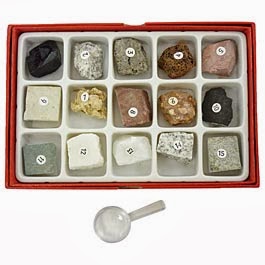
Rock Study Kit, 15 Specimens

Mineral Study Kit, 15 Specimens

Geology Field Trip in a Bag - We use these specimens for general sorting, etc. activities where it's not imperative that we know what the specimens are. We also use them for activities involving water. The samples from the other kits have paper identification tags attached to them.